
Introduction
Installing a solar system at home is one of the smartest decisions for reducing electricity costs and moving toward renewable energy solutions. With rising energy prices and increasing demand for clean energy solutions, many homeowners are now adopting solar power systems for homes to gain long-term savings and energy independence.
A properly installed system not only lowers monthly bills but also improves property value and supports a sustainable lifestyle through solar electricity generation and energy-efficient home systems. This guide explains every step of installing a solar system in a simple and practical way.
A solar power system converts sunlight into electricity using advanced photovoltaic technology. This electricity can be used to power household appliances, store energy in batteries, or send excess power back to the grid.
Modern residential solar energy systems are designed to be efficient, affordable, and easy to install. With proper planning, even small homes can benefit from solar energy savings and long-term cost reduction.
Step 1: Evaluate Your Energy Needs
The first step in installing a solar system is understanding your electricity consumption. You need to calculate how much power your home uses daily.
A professional home energy assessment helps determine the correct system size. This ensures your solar panel system design matches your usage and avoids overspending.
LSI Keywords:
- electricity consumption analysis
- solar system sizing
- home energy usage planning
Step 2: Site Inspection and Roof Analysis
Next, a technician evaluates your roof condition, angle, and sunlight exposure. This step is essential for efficient rooftop solar installation.
A good roof should:
- Receive maximum sunlight
- Be strong enough to support panels
- Have minimal shading
Proper site analysis improves solar panel efficiency and ensures maximum energy output from your solar electricity system.
Step 3: Choosing the Right Solar System Type
There are three main types of systems:
On-Grid Solar System
Connected to the electricity grid. It reduces bills using net metering systems and is cost-effective.
Off-Grid Solar System
Works independently using solar battery storage systems. Ideal for remote areas.
Hybrid Solar System
Combines grid and battery backup, offering smart and flexible energy storage solutions.
Choosing the right system depends on your budget and energy needs.
Step 4: System Design and Planning
Once the system type is selected, engineers design a customized setup. This includes panel placement, inverter selection, and wiring layout.
A well-designed solar energy system plan ensures maximum performance and efficiency. Engineers also select high-efficiency solar panels to improve output and reduce long-term costs.
Step 5: Obtaining Permits and Approvals
In many regions, you need permission from local authorities before installation. This ensures compliance with safety and electrical standards.
For grid-connected systems, approval is also required for solar net metering systems, allowing you to export excess electricity to the grid.
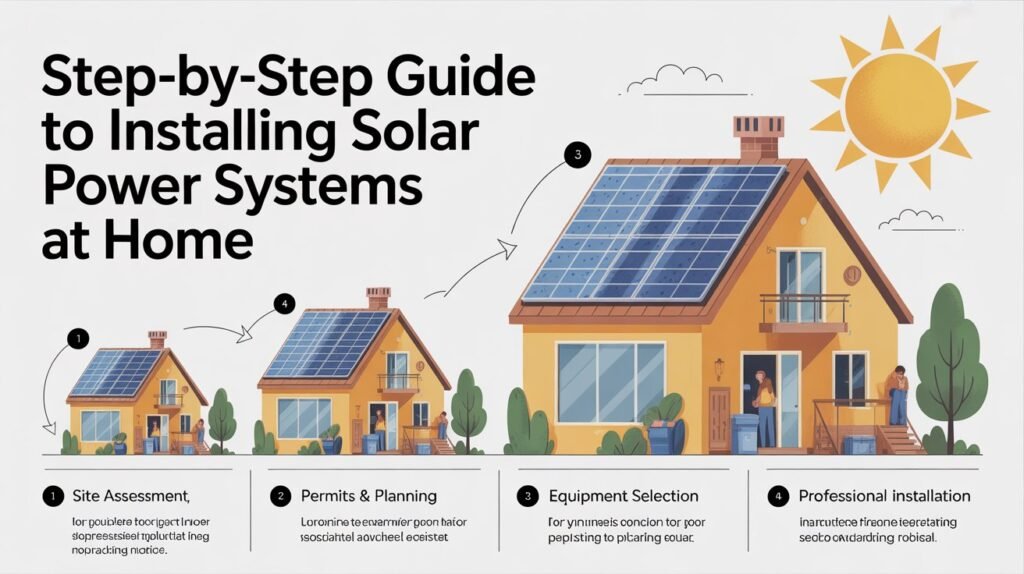
Step 6: Installing Solar Panels
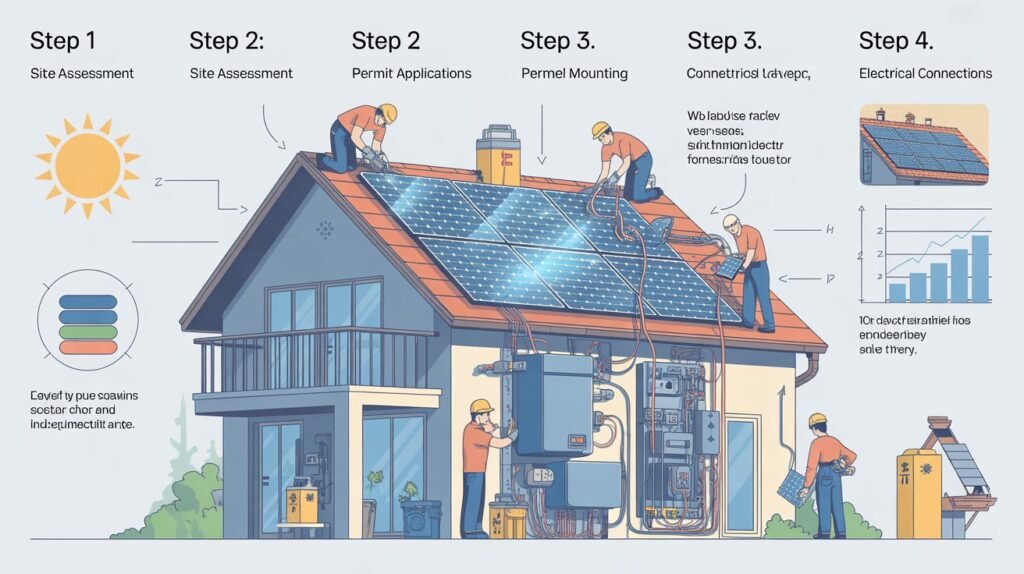
This is the most important step in the process. Panels are mounted on the roof using a strong structure designed for durability and safety.
During installation:
- Panels are aligned for maximum sunlight
- Wiring is connected carefully
- Safety standards are strictly followed
This step ensures proper solar power system installation and long-term stability.
Step 7: Installing the Solar Inverter
The solar inverter system is installed near the main power supply. It converts DC electricity from panels into AC electricity used in homes.
Modern inverters come with smart features such as:
- Real-time monitoring
- Performance tracking
- Fault detection
This improves solar energy management systems and system efficiency.
Step 8: Battery Installation (Optional)
If you choose an off-grid or hybrid system, batteries are installed to store excess electricity.
These solar battery storage systems provide backup power during nighttime or outages, improving energy reliability.
Step 9: Electrical Wiring and Connection
All components are connected through proper wiring, including panels, inverter, and distribution boards. This ensures smooth energy flow and system safety.
Professional installation ensures efficient solar electricity distribution throughout your home.
Step 10: Testing and System Activation
After installation, the entire system is tested. Technicians check:
- Voltage output
- Inverter performance
- Energy production levels
Once everything is verified, the system is activated and starts generating electricity through solar energy conversion systems.
Step 11: Monitoring System Performance
Modern solar systems include monitoring apps that help track energy production.
This allows homeowners to:
- Monitor solar panel efficiency
- Track daily energy usage
- Identify performance issues
Smart monitoring improves energy-efficient home systems and long-term savings.
Benefits of Installing Solar Power Systems at Home
Installing a solar system offers multiple advantages:
- Lower electricity bills through solar energy savings
- Environmentally friendly green energy solutions
- Reduced carbon footprint
- Energy independence
- Increased property value
These benefits make solar one of the best renewable energy investments.
Cost of Solar Installation
The cost of installing a solar system depends on size, equipment quality, and installation complexity.
Key cost factors include:
- Panel type and efficiency
- Inverter technology
- Battery storage (if used)
- Installation charges
Although the initial cost may seem high, long-term savings make it a profitable solar investment system.
Maintenance After Installation
Solar systems require minimal maintenance, but regular care is important:
- Clean panels every few weeks
- Check inverter performance
- Inspect wiring annually
- Monitor system output
Proper care ensures maximum solar panel efficiency and long lifespan.
Common Installation Mistakes to Avoid
- Incorrect system sizing
- Poor roof selection
- Low-quality components
- Improper wiring
- Ignoring maintenance
Avoiding these mistakes ensures better performance and long-term solar system reliability.
Future of Home Solar Systems
The future of solar installation is becoming more advanced with:
- AI-based monitoring systems
- Smart energy optimization
- Better battery technology
- More efficient solar panels for homes
These innovations are making renewable energy systems more accessible and affordable.
Conclusion
Installing a solar power system at home is a step toward financial savings and environmental responsibility. With proper planning, accurate system design, and professional installation, homeowners can enjoy long-term benefits from solar energy systems.
From reducing electricity bills to achieving energy independence, solar technology offers a complete solution for modern households. As technology improves, renewable energy solutions, solar electricity systems, and smart energy systems are becoming more efficient and affordable.
By investing in solar today, you are not only saving money but also contributing to a cleaner and more sustainable future powered by clean energy solutions and advanced solar innovation.
Explained FAQs About Solar Installation
How long does it take to install a solar system?
Installation usually takes 1–3 days depending on system size and roof conditions. Proper solar installation planning ensures faster setup.
Can I install solar panels myself?
It is not recommended. Professional installation ensures safety, efficiency, and proper solar system performance optimization.
How much electricity can a home solar system produce?
A 5kW system can produce enough electricity for an average household, supporting home energy needs efficiently.
Do solar panels work during cloudy weather?
Yes, but at reduced efficiency. Modern high-efficiency solar panels still generate electricity even in low sunlight.
What happens during a power outage?
In on-grid systems, power stops during outages unless a battery or hybrid system is installed.