
Introduction
The global energy landscape is changing rapidly, and solar power is at the center of this transformation. With rising demand for renewable energy solutions and increasing electricity costs, homeowners and industries are shifting toward solar power systems as a long-term solution. Modern technology is making solar electricity generation more efficient, affordable, and intelligent than ever before.
Today’s solar industry is not just about panels on rooftops. It is about smart systems, energy storage, artificial intelligence, and fully integrated clean energy solutions that are shaping the future of global power generation.
Solar energy has evolved from a basic electricity alternative into a highly advanced system powered by innovation. Earlier systems focused only on basic solar panel installations, but now the focus is on efficiency, storage, and smart energy management.
The rise of residential solar energy systems and commercial solar farms shows that solar power is becoming a core part of global energy infrastructure. With advancements in solar energy technology, the world is moving toward cleaner and more sustainable energy sources.
High-Efficiency Solar Panels (Next-Gen Technology)
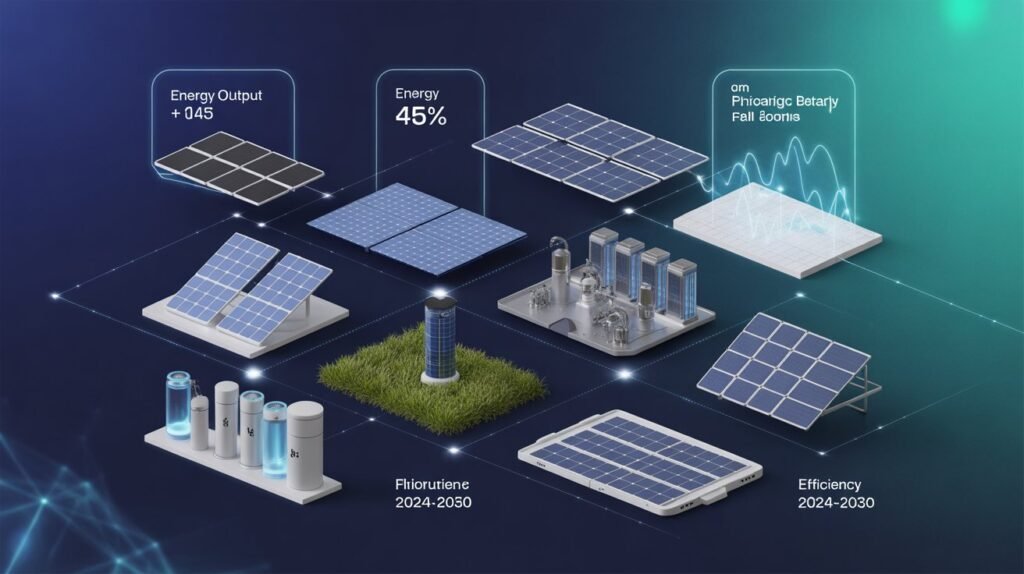
One of the biggest innovations in the solar industry is the development of high-efficiency solar panels such as TOPCon, HJT, and perovskite-based cells.
These panels offer:
- Higher solar panel efficiency
- Better performance in low sunlight
- Reduced energy loss
- Longer lifespan
This innovation improves overall solar electricity generation and allows homeowners to produce more power using fewer panels.
Bifacial Solar Panels: Double-Sided Energy Capture
Bifacial panels are designed to absorb sunlight from both sides. The front captures direct sunlight, while the back captures reflected light from surfaces.
This technology increases energy output and is widely used in advanced solar energy systems and large-scale installations.
Benefits include:
- Higher energy production
- Better land utilization
- Improved renewable energy efficiency
Smart Solar Inverters and AI Integration
Modern solar inverter systems are no longer simple conversion devices. They now include smart features powered by artificial intelligence.
These smart inverters can:
- Monitor real-time energy usage
- Automatically optimize performance
- Detect system faults
- Improve solar energy management systems
AI integration also supports smart solar systems that adjust energy flow based on usage patterns.
Advanced Solar Battery Storage Systems
Energy storage is one of the most important areas of innovation. New solar battery storage systems use lithium-ion, lithium iron phosphate (LiFePO4), and solid-state technology.
Key improvements:
- Longer battery life
- Faster charging cycles
- Higher storage capacity
- Better backup during outages
These systems support off-grid solar solutions and improve energy independence.
Floating Solar Farms
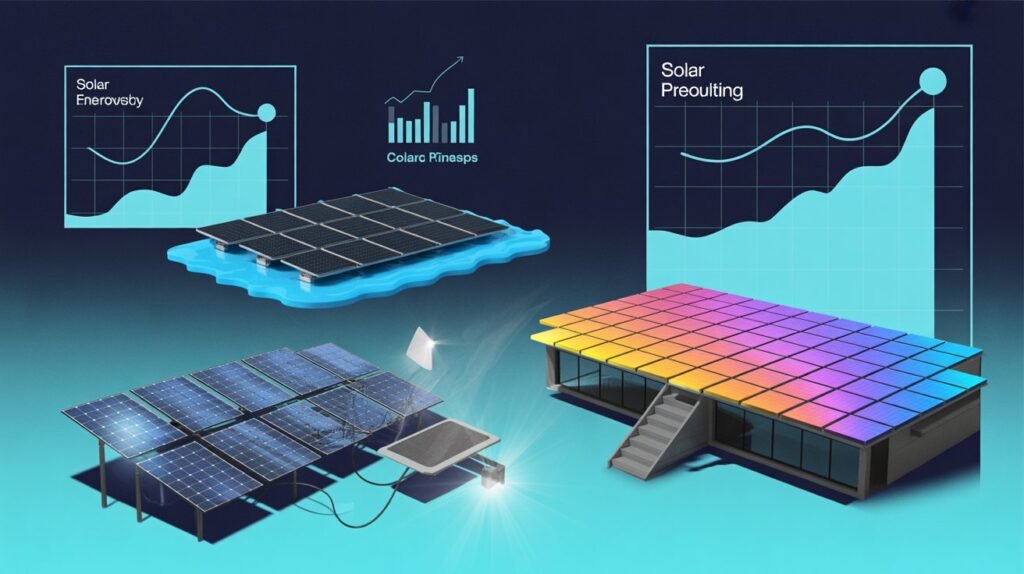
Floating solar panels are installed on lakes, reservoirs, and dams. This innovation reduces land usage and improves efficiency due to natural cooling from water.
Floating systems contribute to:
- Large-scale renewable energy generation
- Water conservation by reducing evaporation
- Higher panel efficiency
This is becoming a major trend in global solar energy expansion.
Solar Tracking Systems
Solar trackers are advanced systems that move panels according to the sun’s position.
Types include:
- Single-axis trackers
- Dual-axis trackers
These systems significantly increase solar panel efficiency and improve daily energy production by up to 25–40%.
Smart Grids and Energy Sharing
The future of solar energy is closely connected to smart grid technology. Smart grids allow real-time communication between energy producers and consumers.
With smart grids:
- Excess electricity can be shared
- Energy distribution becomes efficient
- Grid stability improves
This supports decentralized solar electricity networks and promotes energy independence.
AI-Powered Energy Optimization
Artificial intelligence is transforming how solar systems operate. AI-based systems analyze weather, usage patterns, and energy demand to optimize performance.
Benefits:
- Reduced energy waste
- Improved solar energy savings
- Automated system control
- Better energy forecasting
This is a key part of future smart energy solutions.
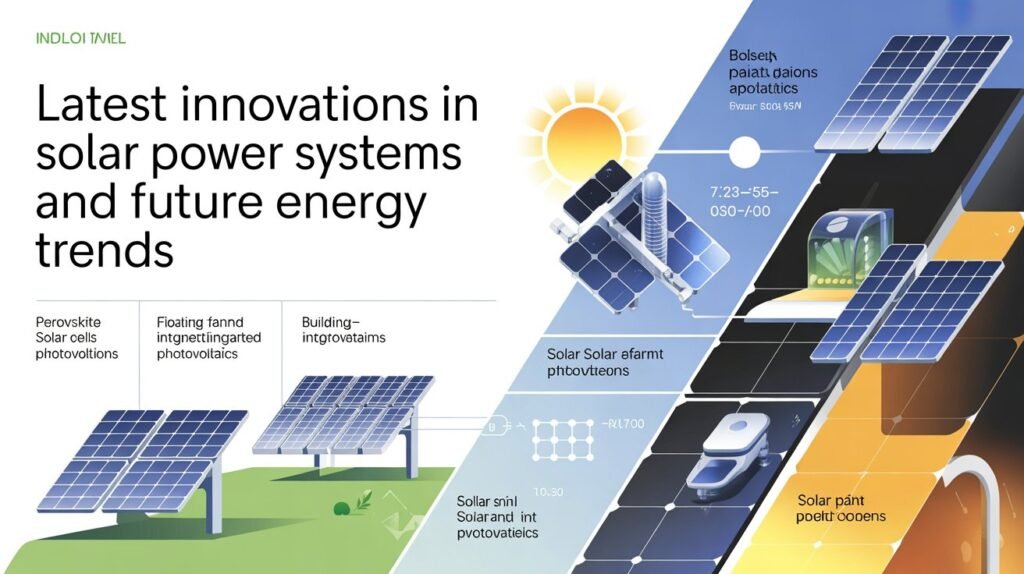
Perovskite Solar Cells: The Future of Panels
Perovskite solar cells are one of the most promising innovations in the industry. They are cheaper to produce and more flexible than traditional silicon panels.
Advantages:
- Lower production cost
- High energy efficiency potential
- Lightweight and flexible design
This technology could revolutionize solar power systems for homes in the future.
Building-Integrated Photovoltaics (BIPV)
BIPV technology integrates solar panels directly into buildings, such as roofs, windows, and walls.
This innovation:
- Saves space
- Improves aesthetics
- Generates clean energy simultaneously
It represents the future of energy-efficient home systems and urban solar design.
Future Energy Trends in Solar Power
1. Net-Zero Energy Homes
Homes will increasingly produce as much energy as they consume using solar energy systems and smart storage.
2. Decentralized Energy Production
Instead of relying on central power plants, homes and businesses will generate and share electricity through renewable energy networks.
3. AI-Driven Smart Energy Systems
Energy management will become fully automated using AI-based solar energy optimization systems.
4. Expansion in Developing Countries
Affordable solar power systems for homes will bring electricity to remote and rural areas worldwide.
5. Integration with Electric Vehicles
Solar systems will directly charge EVs, creating a complete clean energy ecosystem.
Impact of Innovations on Energy Costs
New solar technologies are reducing installation and maintenance costs while increasing efficiency. This makes solar system installation more affordable for households.
Lower costs lead to:
- Faster return on investment
- Higher adoption rates
- Increased solar energy savings
Environmental Benefits of Future Solar Technology
Modern solar systems significantly reduce carbon emissions and environmental impact.
They support:
- Green energy solutions
- Reduced fossil fuel dependency
- Cleaner air and environment
- Sustainable development goals
Conclusion
The future of solar energy is extremely promising, driven by continuous innovation and technological advancement. From high-efficiency solar panels to AI-powered systems and advanced energy storage solutions, solar power is becoming smarter and more powerful every year.
These innovations are transforming traditional solar power systems for homes into intelligent energy networks that support sustainability, independence, and cost savings.
As the world moves toward renewable energy solutions and clean energy systems, solar power will play a central role in shaping global energy infrastructure. Investing in solar today means preparing for a future powered by efficiency, innovation, and environmental responsibility.
FAQs
1. What is the latest innovation in solar energy?
The latest innovations include bifacial panels, AI-powered inverters, and advanced solar battery storage systems that improve efficiency and performance.
2. How will solar energy look in the future?
Solar energy will become smarter, cheaper, and more integrated with AI, smart grids, and renewable energy systems.
3. Are solar panels becoming more efficient?
Yes, modern high-efficiency solar panels like TOPCon and perovskite cells are significantly improving energy output.
4. What is a smart solar system?
A smart solar system uses AI and IoT technology to monitor, control, and optimize energy production and usage in real time.
5. Will solar energy replace traditional electricity?
Solar energy will not fully replace it immediately but will become the dominant source of clean energy solutions in the future.