
Introduction
Solar energy is quickly becoming one of the best solutions for homeowners who want to reduce electricity costs and adopt a cleaner lifestyle. A solar power system for homes allows you to generate your own electricity using sunlight, making it a reliable and eco-friendly option. With rising energy prices, many households are switching to renewable energy solutions, residential solar energy systems, and home solar panel setups to gain long-term savings and independence.
An on-grid solar system is connected to the utility grid and allows you to use electricity when needed while exporting excess power. An off-grid solar system operates independently and relies on battery storage systems for backup. A hybrid solar system combines both features, offering flexibility and reliability.
Solar Power Systems
A solar power system is designed to convert sunlight into usable electricity through advanced technology known as photovoltaic systems. These systems are widely used in rooftop solar panels, helping homeowners produce their own power. The demand for solar electricity generation and clean energy solutions has increased significantly due to environmental concerns and energy cost savings.
How Solar Power Systems Work
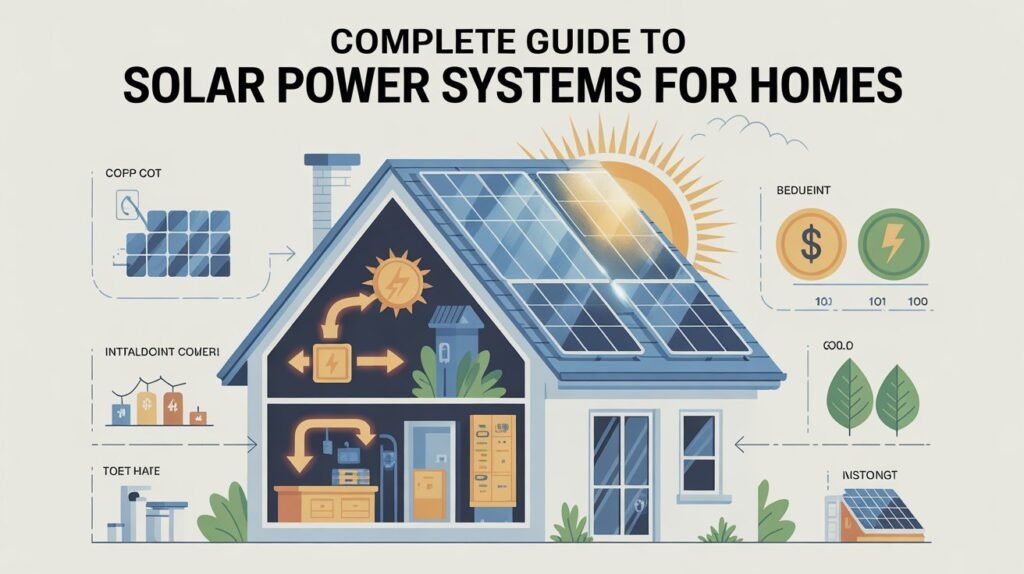
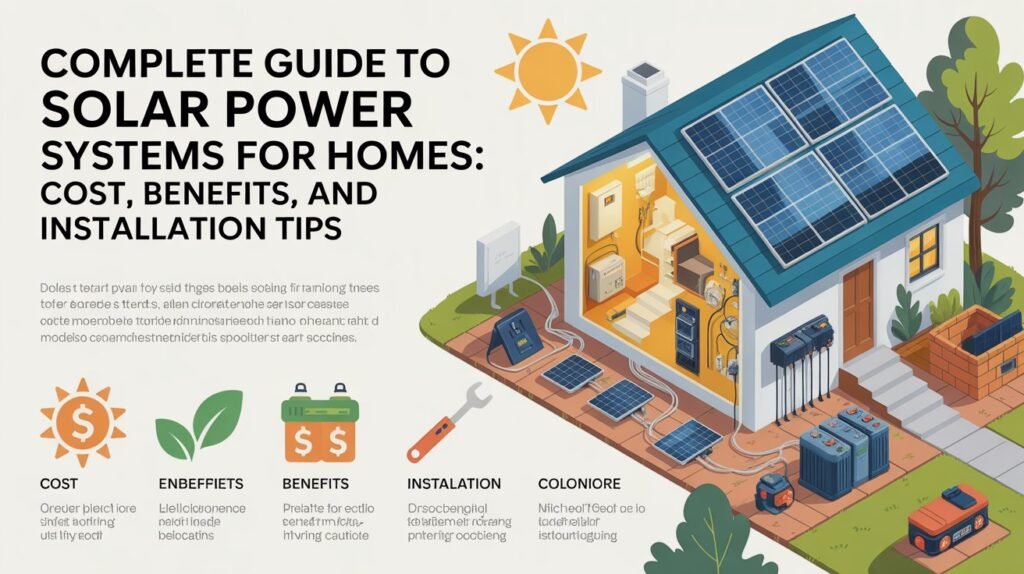
A typical solar setup works by capturing sunlight and converting it into electricity. The process involves key components such as solar panels, inverters, and optional energy storage systems.
Solar panels absorb sunlight and generate direct current (DC), which is then converted into alternating current (AC) using a solar inverter function. This electricity powers your home appliances efficiently. In advanced setups, battery backup systems store excess energy for later use, especially during nighttime or outages.
There are three main types of systems available:
- On-grid solar system connected to utility electricity
- Off-grid solar system for complete independence
- Hybrid solar system combining grid and battery storage
These systems are part of modern solar energy solutions and support efficient home energy management systems.
Benefits of Solar Power Systems for Homes
Installing a solar system offers multiple advantages. First, it significantly reduces your monthly electricity bills by using solar energy savings and lowering dependency on traditional power sources. Homeowners can benefit from cost-effective energy solutions and stable electricity costs over time.
Solar power is also environmentally friendly. By using eco-friendly power solutions and green energy alternatives, you reduce carbon emissions and contribute to a cleaner planet. Another major benefit is energy independence, as you rely less on utility companies and protect yourself from rising electricity prices.
Additionally, solar systems require minimal maintenance and can last over two decades. Investing in long-term solar investment and sustainable energy systems also increases your property value, making it a smart financial decision.
Cost of Solar Power Systems for Homes
The cost of installing a solar system depends on various factors such as system size, equipment quality, and installation complexity. Generally, the solar system price is calculated based on capacity (kW), which determines how much electricity your system can generate.
Smaller systems are more affordable, while larger systems require a higher initial investment but provide greater savings over time. The overall solar installation cost may also include components like high-efficiency solar panels, advanced inverters, and optional battery storage.
It is important to consider additional expenses such as maintenance, cleaning, and potential battery replacement. However, with proper planning, a home solar investment can deliver excellent returns and reduce long-term energy expenses.
Installation Process of Solar Power Systems
Installing a solar system involves a structured process to ensure optimal performance. It starts with an energy assessment to determine your electricity needs. Professionals then conduct a site inspection to evaluate roof condition and sunlight exposure for effective rooftop solar setup.
Once the evaluation is complete, a customized system design is created. This includes selecting the right components and planning the layout for maximum efficiency. After obtaining necessary permits, the installation team sets up the panels, inverter, and wiring.
Finally, the system is tested and activated, ensuring smooth operation. This entire process is part of a professional solar panel installation guide and ensures a safe and efficient setup.
Choosing the Right Solar Power System
Selecting the right solar system requires careful consideration of your energy usage, budget, and available space. A well-planned system should match your daily electricity consumption and future energy needs.
When choosing a system, focus on high-performance solar panels, reliable inverters, and advanced solar energy planning techniques. You should also consider factors like sunlight exposure, roof orientation, and backup requirements.
Investing in the best solar system for home ensures maximum efficiency and long-term savings. Proper decision-making helps avoid unnecessary costs and improves system performance.
Maintenance and Care Tips
Solar systems are known for being low-maintenance, but regular care is essential for optimal performance. Cleaning panels periodically helps maintain efficiency by removing dust and debris. Monitoring the system ensures consistent solar panel efficiency and detects any issues early.
Routine inspections of wiring and inverter performance also help extend the lifespan of your system. By following proper solar system care and panel maintenance tips, you can ensure reliable energy production for many years.
Common Mistakes to Avoid
Many homeowners make mistakes when installing solar systems, such as choosing low-quality equipment or ignoring proper installation standards. Poor planning and incorrect system sizing can lead to reduced efficiency.
Avoiding these mistakes and focusing on professional solar installation, quality solar components, and accurate energy calculations will ensure better results and higher returns on investment.
Future of Solar Power Systems
The future of solar energy looks very promising. With continuous advancements in technology, solar panels are becoming more efficient and affordable. Innovations in smart solar systems and energy storage technology are making it easier to manage and store electricity.
Governments and organizations are also promoting renewable energy adoption, making solar systems more accessible to homeowners. As technology improves, solar power will continue to play a major role in global energy solutions.
Conclusion
Solar power systems for homes offer a powerful combination of cost savings, environmental benefits, and energy independence. By investing in renewable energy solutions, home solar panel systems, and sustainable power technology, homeowners can reduce their reliance on traditional electricity sources.
Although the initial setup cost may seem high, the long-term benefits make it a worthwhile investment. With proper installation, smart planning, and regular maintenance, a solar system can provide reliable electricity for decades.
Switching to solar energy is not just a financial decision—it is a step toward a cleaner, greener, and more sustainable future.
FAQs
How much does a solar power system cost for a home?
The cost of a solar system varies depending on system size, equipment quality, and installation complexity. A small residential setup may cost less, while larger systems with high-efficiency solar panels and advanced inverter systems cost more. Additional features like battery storage systems also increase the price. However, over time, solar energy savings and reduced electricity bills make it a smart long-term investment.
How many solar panels are required for a house?
The number of panels depends on your daily electricity usage, roof size, and panel efficiency. On average, a typical home may require 10–20 panels. A proper home energy assessment and solar system planning help determine the exact requirement. Using high-performance solar panels can reduce the number of panels needed.
Can solar panels run a whole house?
Yes, a well-designed solar system can fully power a home. If you install a system that matches your energy needs, it can generate enough electricity to run all appliances. For complete independence, combining off-grid solar systems with energy storage solutions ensures uninterrupted power even at night or during outages.
Do solar panels work at night or during cloudy weather?
Solar panels do not produce electricity at night because they require sunlight. However, during cloudy days, they still generate power at reduced efficiency. To maintain a continuous power supply, homeowners often use solar battery storage systems or stay connected to the grid through an on-grid solar system.
How long do solar panels last?
Most solar panels have a lifespan of 20–25 years, but they can continue producing electricity even after that period with slightly reduced efficiency. Regular solar panel maintenance and proper care help maintain panel performance and extend system life.