
🇺🇸 Introduction
Solar energy in the United States has grown rapidly due to rising electricity costs, federal incentives, and improved technology. Whether for a home or a business, solar power can lower energy bills, provide long-term savings, and reduce environmental impact.
⚡ What is a Solar Power System?
A solar power system converts sunlight into electricity using solar panels and other equipment. It can power your property, reduce dependence on the utility grid, and even generate income through energy credits.
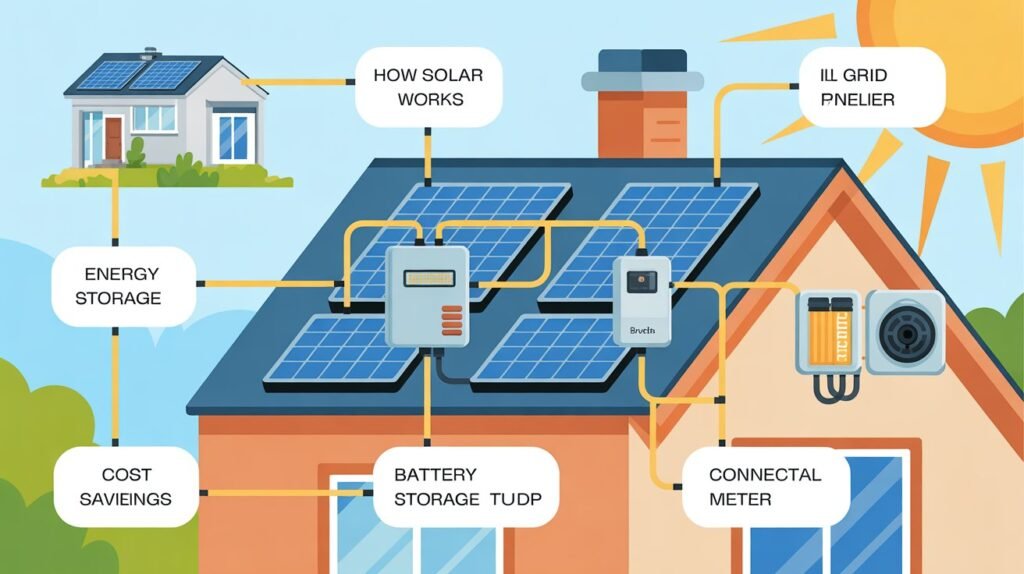
🔄 How Solar Systems Work
- Solar panels capture sunlight and generate DC electricity
- An inverter converts DC into AC (usable power)
- Electricity runs your home or business
- Extra energy is:
- Sent to the grid (net metering), or
- Stored in batteries
🔧 Key Components
Solar Panels
Installed on rooftops or ground-mounted systems, they generate electricity from sunlight.
Inverter
Converts electricity into a usable form. Common types include string inverters and microinverters.
Battery Storage (Optional)
Stores excess energy for use during outages or at night. Popular for backup power.
Mounting System
Secures panels safely on roofs or land.
Monitoring System
Tracks system performance in real time via apps or software.
🏠 Types of Solar Systems in the USA
🔌 Grid-Tied System (Most Common)
- Connected to the utility grid
- Lower upfront cost
- Uses net metering policies
🔋 Off-Grid System
- Completely independent
- Requires battery storage
- Used in remote locations
🔄 Hybrid System
- Grid-connected with battery backup
- Provides energy security during outages
💰 Financial Benefits in the USA
Federal Tax Credit
The Federal Investment Tax Credit (ITC) allows you to deduct a percentage of your solar installation cost from your federal taxes.
Net Metering
Policies vary by state, but many utilities credit you for excess electricity sent to the grid.
State & Local Incentives
Some states offer rebates, tax exemptions, or performance-based incentives.
📊 Cost Overview (USA)
- Residential systems: typically $10,000–$30,000 before incentives
- Commercial systems: higher but offer larger long-term savings
- Costs depend on system size, location, and equipment
👉 After incentives, costs can drop significantly.
📈 Return on Investment (ROI)
- Average payback period: 6–10 years
- System lifespan: 25+ years
- Long-term savings: tens of thousands of dollars
🏢 Solar for Businesses
Businesses benefit from:
- Lower operating costs
- Tax incentives and depreciation (MACRS)
- Improved sustainability image
- Energy price stability
Large commercial systems can significantly reduce overhead expenses.
⚠️ Things to Consider (USA)
- Roof condition and orientation
- Local regulations and permits
- Utility policies in your state
- Installer reputation and certifications
- Financing options (loan, lease, PPA)
🔌 Popular Solar Brands in the USA
- Tesla (solar panels + batteries)
- SunPower (high-efficiency panels)
- Enphase Energy (microinverters & systems)
🧰 Maintenance Tips
- Keep panels clean (rain usually helps)
- Monitor system performance regularly
- Schedule periodic inspections
- Ensure no shading from trees or debris
✅ Final Thoughts
Solar power systems in the U.S. are a practical and financially smart investment for both homeowners and businesses. With federal incentives, net metering, and long-term savings, switching to solar is easier and more beneficial than ever.