
Introduction
Choosing the right solar powered home appliances is not just about buying products—it’s about understanding your energy needs, budget, and long-term goals. In 2026, solar technology has become more advanced and affordable, but the real challenge is selecting the right setup that fits your lifestyle and ensures maximum solar energy savings.
Whether you live in a small apartment or a large house, the right renewable energy solutions can reduce electricity bills, provide backup during outages, and help you move toward energy independence. This guide will explain everything step by step in simple, human language so you can confidently choose the best solar appliances for your home.
Why Choosing the Right Solar Appliances Matters
Many people buy solar products without proper planning and end up wasting money. The truth is, every home has different energy needs.
Choosing correctly helps you:
- Avoid overspending on unnecessary equipment
- Improve home energy efficiency
- Maximize performance of solar electricity systems
- Ensure long-term savings
- Build a reliable solar energy system
Smart selection is the difference between a struggling system and a fully efficient clean energy solution.
Step 1: Understand Your Daily Energy Usage
Before buying anything, you need to understand how much electricity your home uses.
Ask yourself:
- How many lights do I use daily?
- Do I run fans, fridge, or AC regularly?
- How many hours do appliances run?
This helps you calculate your load and choose the right solar energy system size.
For example:
- Small home = low energy usage
- Medium home = moderate usage
- Large home = high usage system required
This step ensures proper planning for solar electricity generation.
Step 2: Decide Between Essential and Luxury Appliances
Not all solar appliances are necessary at the beginning.
Essential appliances:
- Solar lights
- Solar fans
- Solar chargers
Optional (luxury or advanced):
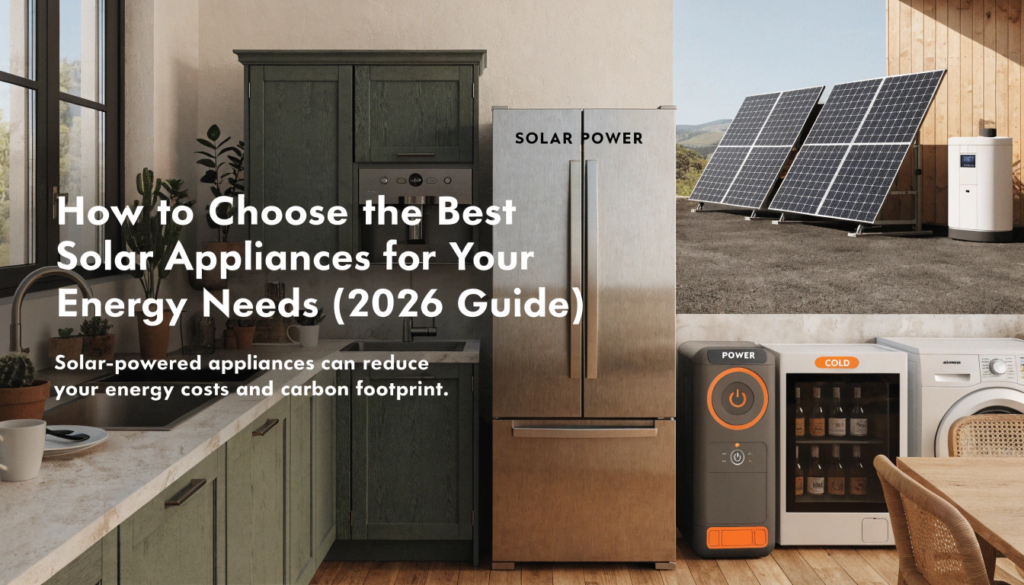
- Solar refrigerators
- Solar air conditioners
- Solar water heaters
Start with essentials to reduce cost and slowly upgrade your solar powered systems over time.
Step 3: Check Solar Panel Capacity
Your solar appliances depend on how much power your panels generate.
Important factors:
- Panel wattage
- Sunlight availability
- Roof space
- System efficiency
A good high-efficiency solar panel system ensures stable power for all appliances.
If your system is too small, appliances won’t perform properly. If too large, you may overspend unnecessarily.
Step 4: Choose the Right Battery Storage System
Battery storage is very important for nighttime or cloudy weather usage.
A strong solar battery storage system allows you to:
- Store extra energy
- Run appliances at night
- Handle power outages
Without batteries, your system will only work during sunlight hours.
Step 5: Focus on Energy Efficiency
Always check how much energy each appliance consumes.
Look for:
- High efficiency ratings
- Low wattage usage
- Smart energy control
Efficient devices improve solar system performance and increase long-term solar energy savings.
Step 6: Choose Reliable Brands and Quality Products
Not all solar products are the same.
Low-quality systems may:
- Break quickly
- Waste energy
- Reduce efficiency
Always choose trusted brands that support clean energy solutions and offer warranty and support.
Step 7: Consider Your Budget Carefully
Solar systems come in different price ranges.
Budget levels:
- Low budget: basic lights, fans, chargers
- Medium budget: water heaters, small systems
- High budget: full home systems with AC and fridge
Even small investments can give long-term solar energy savings if planned properly.
Step 8: Think About Future Expansion
Your energy needs may increase in the future.
Choose systems that are:
- Scalable
- Expandable
- Compatible with upgrades
This ensures your renewable energy system grows with your needs.
Best Solar Appliances Based on Energy Needs
1. For Low Energy Homes
- Solar LED lights
- Solar mobile chargers
- Small solar fans
Perfect for apartments and small spaces.
2. For Medium Energy Homes
- Solar water heaters
- Solar refrigerators
- Multiple fans and lights
Balanced setup for families.
3. For High Energy Homes
- Solar air conditioners
- Large inverter systems
- Full backup battery systems
Ideal for complete energy independence.
Common Mistakes People Make
Avoid these mistakes:
- Buying oversized systems
- Ignoring battery requirements
- Choosing cheap low-quality products
- Not calculating energy usage
These mistakes reduce solar panel efficiency and increase cost.
Benefits of Choosing the Right Solar Appliances
- Lower electricity bills through solar energy savings
- Better system performance
- Long-term durability
- Reduced environmental impact
- Stable energy supply
Proper selection improves your entire solar energy system.
Future of Solar Appliance Selection
In 2026 and beyond, solar systems are becoming smarter:
- AI-based smart solar appliances
- Automatic energy management
- Better battery storage
- Plug-and-play solar kits
These innovations make renewable energy solutions easier for everyone.
Conclusion
Choosing the best solar appliances is not about buying the most expensive system—it’s about understanding your real energy needs and planning wisely. When selected correctly, solar powered home appliances can transform your home into an efficient, cost-saving, and environmentally friendly space.
With proper use of renewable energy systems, solar battery storage systems, and efficient devices, you can significantly reduce electricity bills and achieve true energy independence.
In the end, the goal is simple: build a smart system that gives you reliable power, long-term solar energy savings, and a sustainable lifestyle powered by clean energy solutions.
FAQs
How do I know which solar appliances I need?
You need to calculate your daily electricity usage first. Then choose appliances based on essential needs like lights, fans, and fridge using solar electricity generation systems.
Should I start small or buy a full system?
It is better to start small and expand later. This helps you manage cost and improve solar energy savings over time.
Do I need batteries for solar appliances?
Yes, batteries are important if you want backup power. Solar battery storage systems help you run appliances at night or during outages.
What is the most important factor when choosing solar products?
Energy efficiency is the most important factor. High-efficiency systems improve performance and reduce waste in solar powered systems.
5. Can solar appliances power a full house?
Yes, with a properly designed renewable energy system, you can power most or all household appliances.