Introduction
The debate between solar powered home appliances and traditional electrical appliances is becoming more important in 2026 as energy prices rise and people look for better renewable energy solutions. Homeowners today want systems that reduce electricity bills, improve efficiency, and support eco-friendly living.
On one side, traditional appliances rely completely on grid electricity. On the other side, solar appliances use solar electricity generation to power homes using sunlight. Both options have advantages and limitations, but the right choice depends on cost, efficiency, performance, and long-term goals like energy independence.
This guide gives a detailed comparison in simple, human-friendly language so you can clearly understand which option is better for your home.
What Are Traditional Appliances?
Traditional appliances are devices like fans, refrigerators, air conditioners, and lights that run directly on electricity from the national grid.
They depend on fossil-fuel-based power plants or hydroelectric systems. While they are widely available and easy to use, they are fully dependent on electricity supply and rising energy costs.
Traditional systems do not support clean energy solutions unless the grid itself uses renewable sources.
What Are Solar Appliances?
Solar appliances are devices that operate using energy generated from sunlight through solar energy systems. They either run directly on solar power or store energy in batteries for later use.
These systems are part of modern solar powered home appliances technology and are designed to reduce dependency on grid electricity while promoting eco-friendly energy solutions.
They work using:
- Solar panels
- Charge controllers
- Inverters
- Solar battery storage systems
Cost Comparison: Solar vs Traditional Appliances
Traditional Appliances Cost
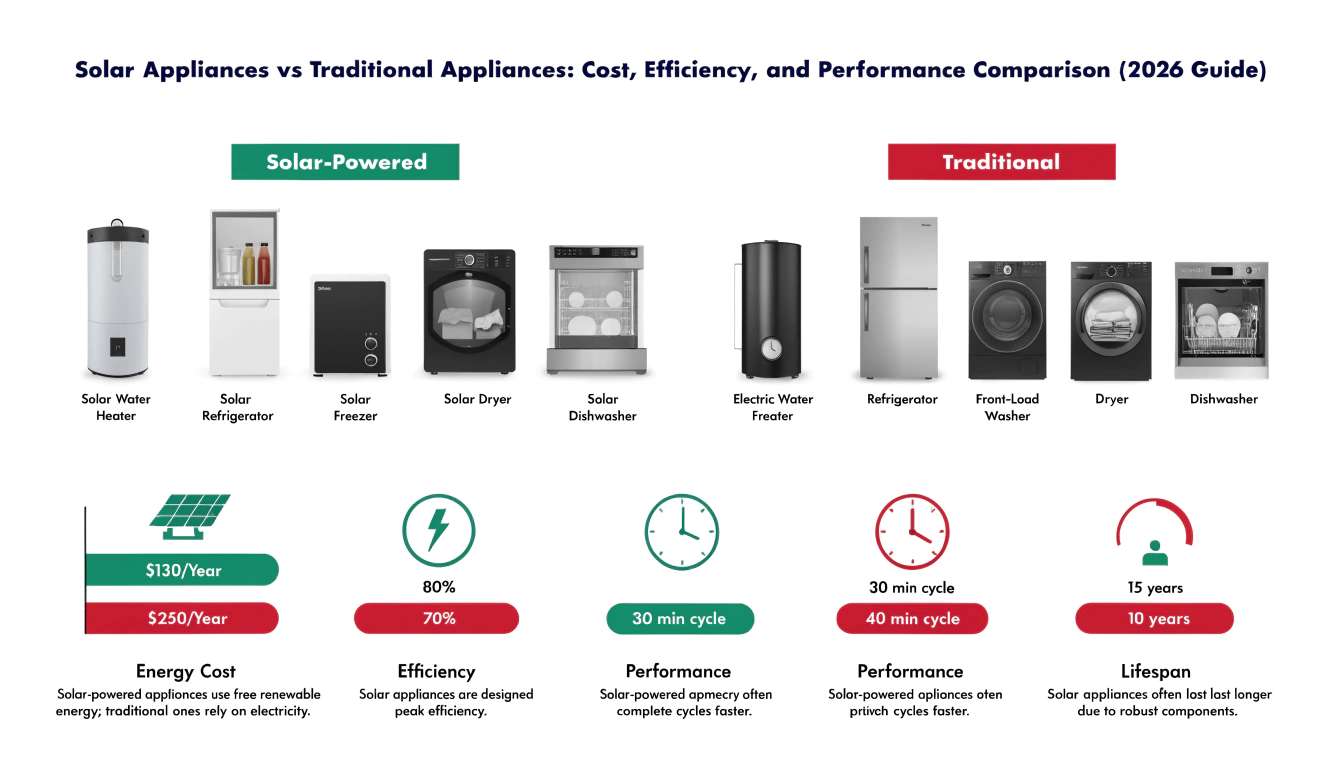
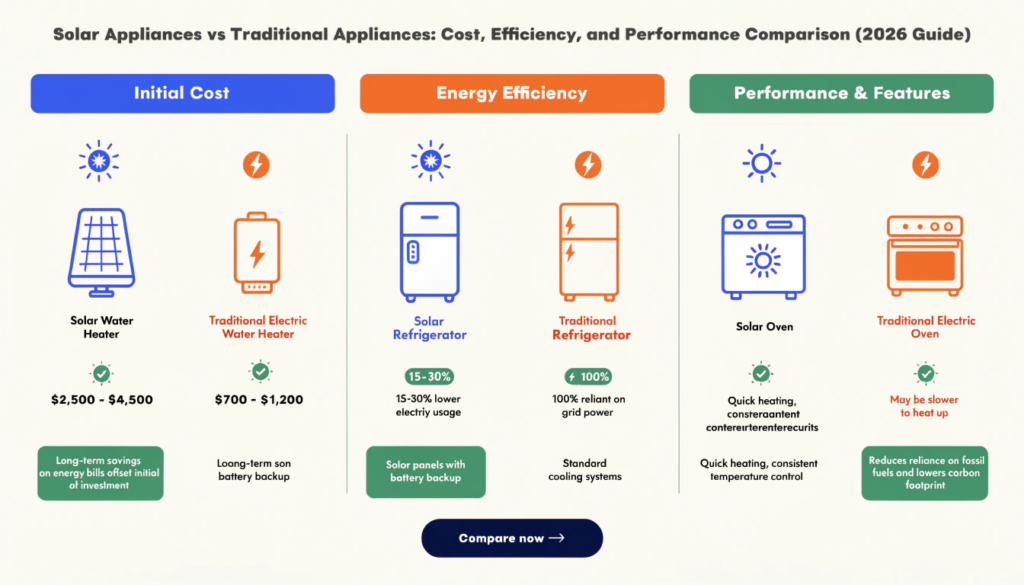
Traditional appliances are cheaper to buy initially. However, they come with ongoing electricity bills.
Hidden long-term costs include:
- Monthly electricity bills
- Rising energy prices
- Generator or backup costs during outages
So while upfront cost is low, lifetime expenses are high.
Solar Appliances Cost
Solar appliances require higher initial investment because you need a full solar energy system including panels and batteries.
But the benefits include:
- Reduced or zero electricity bills
- Long-term solar energy savings
- Less dependency on grid power
Over time, solar systems often become cheaper than traditional systems.
Efficiency Comparison
Traditional Appliances Efficiency
Traditional appliances are designed for performance, but their efficiency depends on the electricity supply.
Issues include:
- Power fluctuations
- Voltage instability
- Energy losses in grid distribution
This affects overall home energy efficiency.
Solar Appliances Efficiency
Modern solar appliances are highly efficient and optimized for low energy usage.
Advantages include:
- Direct use of sunlight
- Smart energy management
- Better performance with high-efficiency solar panels
However, efficiency depends on sunlight availability and system size.
Performance Comparison
Traditional Appliances Performance
Traditional appliances generally provide stable and consistent performance as long as electricity is available.
But performance issues occur during:
- Load shedding
- Power outages
- Voltage drops
This affects reliability in many regions.
Solar Appliances Performance
Solar appliances perform well when properly installed and sized.
Performance benefits:
- Reliable during daylight
- Backup during outages (with batteries)
- Stable solar electricity systems when well designed
However, cloudy weather can slightly reduce output.
Environmental Impact Comparison
Traditional Appliances
Traditional systems contribute to:
- Carbon emissions
- Fossil fuel consumption
- Environmental pollution
They are not fully aligned with green energy solutions.
Solar Appliances
Solar appliances are clean and sustainable.
They:
- Reduce carbon footprint
- Use renewable sunlight
- Support clean energy solutions
This makes them ideal for long-term environmental protection.
Maintenance Comparison
Traditional Appliances Maintenance
- Regular servicing required
- Electrical faults possible
- Wear and tear over time
Maintenance cost can increase over years.
Solar Appliances Maintenance
- Low maintenance
- Occasional cleaning of panels
- Battery checks required
Overall, solar systems are easier to maintain and support better solar system efficiency.
Energy Independence Comparison
Traditional Appliances
Traditional appliances rely fully on the grid, meaning:
- No independence
- High dependency on utility companies
- Vulnerable to outages
Solar Appliances
Solar appliances support full or partial energy independence.
Benefits include:
- Self-generated electricity
- Reduced reliance on grid
- Backup during outages using solar battery storage systems
This is one of the biggest advantages of solar systems.
Cost Over Time (Long-Term View)
Traditional Systems
- Low initial cost
- High lifetime electricity bills
Solar Systems
- High initial cost
- Very low or zero running cost
Over 5–10 years, solar systems often become more cost-effective due to solar energy savings.
Best Use Cases
Traditional Appliances Are Better When:
- You have low initial budget
- Electricity is cheap and stable
- No roof space for solar panels
Solar Appliances Are Better When:
- You want long-term savings
- You live in sunny regions
- You want energy independence
- You want eco-friendly living systems
Future Trends (2026 and Beyond)
The future is clearly moving toward solar:
- Smart solar powered home appliances
- AI-controlled energy systems
- Better battery storage
- Hybrid solar-grid systems
These innovations are improving renewable energy systems worldwide.
Conclusion
The comparison between solar and traditional appliances clearly shows a shift toward cleaner and smarter energy use. Traditional appliances are still useful due to low upfront cost and easy availability, but they come with long-term electricity expenses and environmental impact.
On the other hand, solar powered home appliances offer a more sustainable and cost-effective solution over time. With proper investment in solar energy systems, users can enjoy long-term solar energy savings, reduced dependence on the grid, and better environmental protection.
While the initial cost of solar systems may be higher, the benefits—energy independence, low maintenance, and eco-friendly living—make them a smarter choice for the future powered by clean energy solutions.
FAQs
Which is cheaper in the long run: solar or traditional appliances?
Solar appliances are cheaper in the long run because they reduce electricity bills through solar energy savings, even though the initial setup cost is higher.
Do solar appliances work better than traditional ones?
They work better in terms of cost efficiency and sustainability, but traditional appliances offer stable performance when electricity is available.
Are solar appliances reliable during power cuts?
Yes, especially when connected to solar battery storage systems, they provide backup power during outages.
What is the main disadvantage of solar appliances?
The main disadvantage is the high initial setup cost and dependency on sunlight for solar electricity generation.
Can solar appliances replace all traditional appliances?
Yes, with a properly designed solar energy system, most household appliances can be powered by solar energy.