Introduction
If you’ve ever thought about reducing your electricity bill or becoming less dependent on the power grid, solar appliances are one of the most practical ways to do it. In 2026, solar powered home appliances are no longer “luxury eco-products”—they are real, everyday tools that help families save money and live more independently.
These devices use sunlight to generate electricity and are part of modern renewable energy solutions. The idea is simple: instead of paying for all your electricity from the grid, you produce your own clean power using solar energy. That’s what makes solar appliances a strong step toward energy independence and long-term savings.
What Are Solar Appliances (in Simple Words)?
Solar appliances are normal household devices that run on solar energy instead of full grid electricity. They work through solar electricity generation, where solar panels capture sunlight and convert it into usable power.
That power is either:
- Used instantly
- Stored in batteries
- Or converted for home appliances using an inverter
This setup becomes part of a complete solar energy system, which can run your home partially or fully depending on its size.
Why People Are Switching to Solar Appliances in 2026
The main reason is simple: electricity is expensive and unpredictable. But there are more practical reasons too.
1. Lower monthly bills
With solar energy savings, your electricity cost drops because the sun is doing most of the work.
2. Power during load shedding
In many regions, power cuts are common. Solar systems with solar battery storage systems keep your home running even when the grid is down.
3. Better for the environment
Solar appliances reduce carbon emissions and support eco-friendly energy solutions, which is important for a cleaner future.
4. Long-term investment
Even though setup costs can be high, solar appliances last years and reduce lifetime energy expenses.
How Solar Appliances Actually Work (Easy Explanation)
Think of it like this:
- Sunlight hits solar panels on your roof
- Panels convert sunlight into electricity
- Electricity flows into a controller (to manage power safely)
- Energy is stored in batteries or sent directly to appliances
- Your home devices run on this stored or direct solar power
This entire process is called solar electricity generation, and it is the foundation of all clean energy systems.
Must-Have Solar Appliances for Sustainable Living
Now let’s go through the most useful solar appliances that actually make a difference in daily life.
1. Solar LED Lights (The First Step for Most Homes)
Solar lights are usually the first thing people install—and for good reason.
They charge during the day and automatically turn on at night.
Why they are useful:
- No wiring needed
- Zero electricity cost
- Easy installation
- Works during power cuts
They improve home energy efficiency instantly because lighting is one of the most used electricity loads in any house.
2. Solar Fans (Simple but Very Practical)
In hot weather, fans run almost all day. A solar fan helps reduce that constant electricity usage.
They can run directly on solar power or through batteries.
Benefits:
- Reduces electricity bills
- Works during outages
- Low maintenance
- Ideal for hot climates
They are a key part of energy-efficient home systems.
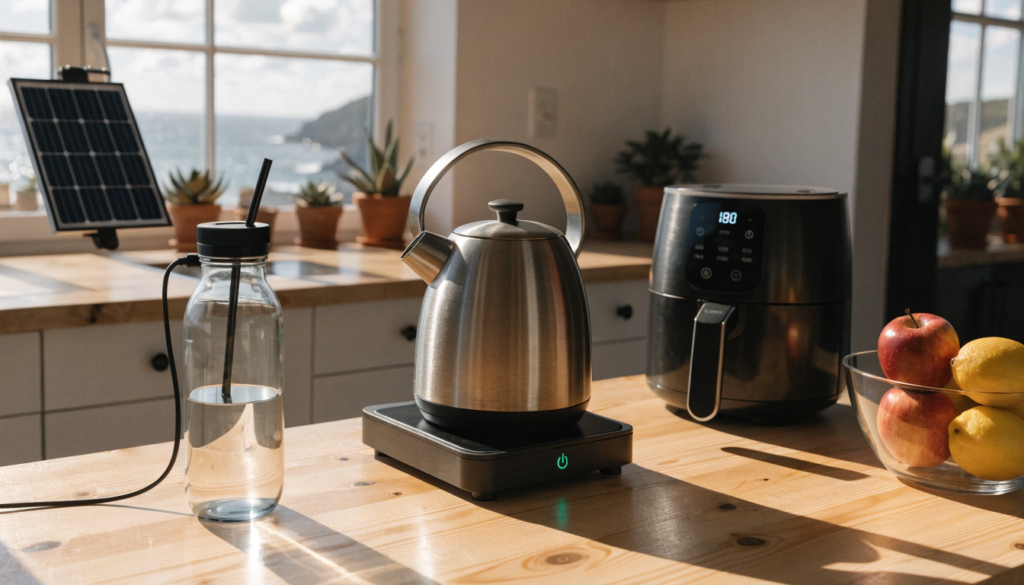
3. Solar Water Heaters (Big Savings Appliance)
Heating water using electricity or gas is expensive. Solar water heaters solve that problem.
They use sunlight to heat water stored in a tank.
Why people love them:
- No monthly fuel cost
- Always available hot water
- Very long lifespan
This is one of the strongest tools for solar energy savings in a household.
4. Solar Refrigerators (For Food Safety and Off-Grid Living)
A fridge is essential, especially in warm regions. Solar refrigerators are designed to run on low energy and often include battery backup.
Key advantages:
- Keeps food fresh off-grid
- Uses low power
- Works during outages
- Reliable for rural homes
They are an important part of modern solar energy systems.
5. Solar Air Conditioners (High Power, High Savings)
Solar ACs are more advanced and require a strong solar setup, but they are becoming more common.
What makes them special:
- Reduces heavy electricity usage
- Works with hybrid systems
- Great for summer savings
They offer serious solar energy savings, especially in hot regions where AC use is high.
6. Solar Chargers and Power Banks (Everyday Convenience)
These are small but very useful. You can charge phones, tablets, and small devices directly from sunlight.
Why they are popular:
- Portable
- Useful during travel or outages
- No electricity needed
They are part of everyday solar electricity systems.
7. Solar Cooking Appliances (Gas-Free Cooking)
Solar cookers use sunlight to heat and cook food. It sounds unusual, but it works well in sunny climates.
Benefits:
- No gas or electricity cost
- Safe cooking method
- Eco-friendly lifestyle
They strongly support green energy solutions.
What to Check Before Buying Solar Appliances
Before you invest, don’t just buy randomly. Think practically.
1. Your daily energy usage
Understand what appliances you actually need.
2. System size
Your solar panel system must match your usage.
3. Battery backup
If you want night usage, you need solar battery storage systems.
4. Efficiency level
Higher efficiency = better long-term savings.
5. Build quality
Cheap products may fail early, so quality matters.
Real Cost of Solar Appliances (Simple View)
- Small items (lights, chargers): low cost
- Medium items (fans, heaters): moderate cost
- Heavy appliances (AC, fridge): high cost
But here’s the important point: over time, solar energy savings usually recover your investment.
Benefits of Using Solar Appliances (Real-Life Impact)
- Lower electricity bills
- Less dependency on power companies
- Backup during outages
- Environment-friendly lifestyle
- Long-term savings
This is why solar systems are becoming a core part of renewable energy solutions worldwide.
Challenges You Should Know
To keep it realistic:
- High initial setup cost
- Needs sunlight (weather dependency)
- Batteries may need replacement
- Proper installation is important
Still, most users find the benefits much greater than the challenges.
Future of Solar Appliances (2026 and Beyond)
Solar technology is improving fast:
- Smarter AI-controlled appliances
- Better battery storage
- More efficient solar panels
- Integration with smart homes
The future is moving toward fully automated clean energy solutions where homes manage their own power intelligently.
Conclusion
Solar appliances are no longer just an alternative—they are becoming a smart lifestyle choice for modern homes. They help you reduce electricity bills, stay powered during outages, and move toward a more independent life.
With improvements in renewable energy systems, better batteries, and smarter technology, solar appliances are becoming more powerful and affordable every year.
Yes, the starting cost can feel high, but the long-term benefits—especially solar energy savings, energy independence, and environmental protection—make them worth it.
In simple terms: solar appliances don’t just save money, they give you control over your own energy future powered by clean energy solutions.
FAQs
What are solar appliances in simple words?
Solar appliances are devices that run on sunlight instead of electricity from the grid. They use solar electricity generation to power your home in a clean and cost-saving way.
Are solar appliances really worth it?
Yes, they reduce electricity bills and provide long-term solar energy savings, making them a smart investment for most homes.
Can solar appliances work at night?
Yes, but only if you have batteries installed. These store energy during the day using solar battery storage systems.
Which solar appliance saves the most money?
Solar water heaters and air conditioners usually save the most because they replace high-electricity appliances.
Do solar systems need maintenance?
Very little. Just clean panels and check batteries occasionally to maintain solar system efficiency.