Introduction
As the world shifts toward sustainable living, solar technology is becoming an essential part of everyday life. From lighting homes to powering kitchen devices, solar appliances are transforming how we use energy. These devices rely on sunlight to operate, making them a key part of modern renewable energy solutions and clean energy systems.For beginners, understanding how solar appliances work can seem complex. This guide breaks everything down in simple terms, explaining the technology, components, benefits, and practical usage of solar powered home appliances in daily life.
Solar appliances are devices that use energy generated from sunlight instead of relying solely on grid electricity. They are powered through solar electricity generation, where sunlight is converted into usable electrical energy using photovoltaic systems.These appliances are part of advanced sustainable energy systems and are widely used in homes, offices, and outdoor environments. With increasing demand for eco-friendly energy solutions, solar appliances are becoming more affordable and accessible.
Basic Working Principle of Solar Appliances
The working principle of solar appliances is based on the photovoltaic effect, where sunlight is converted into electricity. Solar panels capture sunlight and generate direct current (DC) electricity.
This electricity is either used directly by the appliance or converted into alternating current (AC) using an inverter. In some cases, excess energy is stored in solar battery storage systems for later use.
This process ensures efficient solar energy conversion and supports reliable clean energy usage in daily life.
Key Components of Solar Appliances
Solar appliances rely on several important components to function effectively.
Solar Panels
Solar panels capture sunlight and convert it into electricity. They are the foundation of all solar power systems and play a major role in solar electricity generation.
Charge Controller
A charge controller regulates the flow of electricity from panels to batteries, preventing overcharging and ensuring safe operation.
Battery Storage
Batteries store excess energy for use during nighttime or low sunlight conditions. These energy storage systems improve reliability and allow continuous operation.
Inverter
An inverter converts DC electricity into AC power, making it suitable for most household appliances. A high-quality solar inverter system ensures efficient energy use.
Types of Solar Appliances
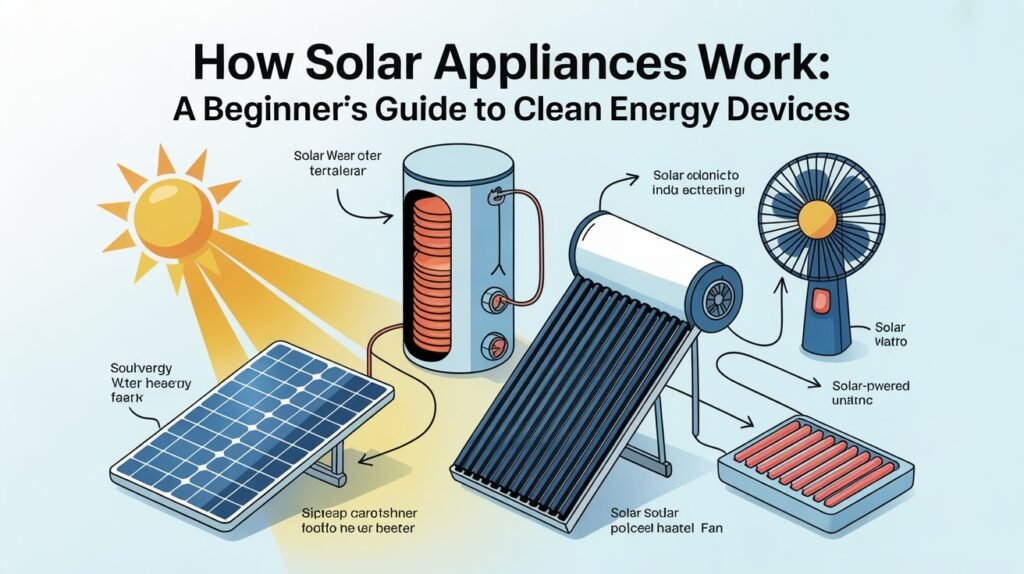
Solar appliances come in different types based on their functionality and usage.
Direct Solar Appliances
These appliances use electricity directly from solar panels without storing it. They are simple and cost-effective.
Battery-Based Solar Appliances
These devices store energy in batteries and can operate even without sunlight. They rely on solar battery storage systems for continuous performance.
Hybrid Solar Appliances
Hybrid appliances can use both solar power and grid electricity, offering flexibility and reliability.
Common Solar Appliances Used in Homes
Solar Lights
Solar lights are widely used for indoor and outdoor lighting. They improve home energy efficiency and reduce electricity bills.
Solar Fans
Solar fans provide cooling using solar energy. They are ideal for areas with power outages and support clean energy usage.
Solar Water Heaters
These appliances use sunlight to heat water, reducing energy consumption and supporting energy-efficient home systems.
Solar Refrigerators
Solar refrigerators maintain cooling using solar energy, making them essential for solar energy systems in off-grid areas.
Solar Air Conditioners
Solar AC units use solar power for cooling, offering significant solar energy savings in hot climates.
Step-by-Step Process: How Solar Appliances Work
Understanding the process step-by-step makes it easier for beginners:
- Solar panels capture sunlight and generate DC electricity through photovoltaic systems.
- The electricity flows through a charge controller to regulate power.
- Energy is stored in batteries or sent directly to the appliance.
- If needed, the inverter converts DC to AC electricity.
- The appliance uses the electricity to perform its function.
This process ensures efficient solar electricity systems and reliable performance.
Benefits of Solar Appliances
Solar appliances offer numerous advantages for households.
Reduced Electricity Bills
Using solar energy savings helps lower monthly electricity costs significantly.
Eco-Friendly Energy
Solar appliances support eco-friendly energy solutions and reduce environmental impact.
Energy Independence
With renewable energy systems, users rely less on grid electricity.
Low Maintenance
Solar appliances require minimal maintenance compared to traditional devices.
Long Lifespan
Most solar systems and appliances last for many years, making them a durable investment.
Factors Affecting Solar Appliance Performance
Several factors influence how well solar appliances work:
- Sunlight availability
- Panel efficiency
- Battery capacity
- System design
Using high-efficiency solar panels and proper installation improves overall performance and ensures better solar panel efficiency.
Cost and Investment Considerations
The cost of solar appliances varies depending on type and features. Basic appliances like lights and chargers are affordable, while advanced systems like refrigerators and AC units require higher investment.
Despite the initial cost, long-term solar energy savings and reduced electricity bills make solar appliances a cost-effective solution.
Maintenance Tips for Solar Appliances
To keep your appliances working efficiently:
- Clean solar panels regularly
- Check battery performance
- Monitor system output
- Inspect wiring and connections
Proper maintenance ensures consistent solar system efficiency and long-term reliability.
Future of Solar Appliances
The future of solar appliances is driven by innovation and technology. Emerging trends include:
- AI-powered smart solar appliances
- Improved battery storage
- Integration with smart home systems
- Increased efficiency and affordability
These advancements are shaping the future of renewable energy solutions and modern living.
Conclusion
Solar appliances are revolutionizing the way we use energy in our daily lives. By converting sunlight into electricity, they provide a clean, efficient, and cost-effective alternative to traditional power sources.
With benefits like reduced electricity bills, environmental protection, and energy independence, solar powered home appliances are becoming an essential part of modern living. Advances in renewable energy solutions, solar energy systems, and smart technologies are making these devices more efficient and accessible.
Adopting solar appliances is not just about saving money—it is about building a sustainable future powered by clean energy solutions and innovative technology.
FAQs
What are solar appliances and how do they work?
Solar appliances are devices that use sunlight to produce electricity through solar electricity generation. They work by using solar panels that capture sunlight and convert it into direct current (DC) electricity. This electricity is either used instantly or converted into alternating current (AC) using an inverter so that it can run household devices.
Do solar appliances work at night?
Yes, solar appliances can work at night, but only if they are connected to solar battery storage systems. During the day, solar panels generate electricity and store excess energy in batteries.
3. Are solar appliances efficient?
Modern solar appliances are highly efficient, especially those using high-efficiency solar panels and advanced technology. Their performance depends on factors such as sunlight availability, panel quality, and system design.
4. Can solar appliances run without batteries?
Yes, some solar appliances can run without batteries if they are designed to operate directly from solar panels. These are called direct solar appliances. However, without batteries, they will only work when sunlight is available. Adding solar battery storage systems
5. Are solar appliances expensive?
The initial cost of solar appliances can be higher than traditional devices, but they offer significant long-term savings. By reducing electricity bills through solar energy savings.